

Press Release – December 17, 2025
─
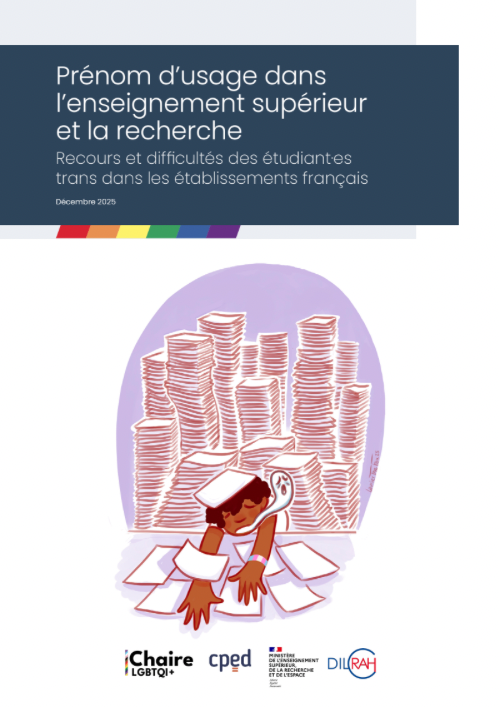
The Standing Conference of Equality and Diversity Officers (CPED) and the LGBTQI+ Chair (Université Claude Bernard Lyon 1) are publishing the results of the survey «Preferred name in higher education and research: Usage and difficulties for trans students in French institutions», carried out in partnership with the Ministry of Higher Education, Research and Space (MESRE). They show that the implementation of the ministerial letter of April 17, 2019 remains largely insufficient.
Steps still not very engaged
The given name, a central lever for respecting gender identity, remains underutilized: 44% of respondents have taken no action. Identified obstacles: plural transitions, the need for a coming out, lack of knowledge of the procedures, transphobic resistance, and insufficient staff training.
A misunderstanding of the devices
Access to information remains patchy: 27% of respondents are unaware of the procedures at their institution. Nevertheless, nearly 60% of respondents discover these procedures upon entry or during their studies, via websites, brochures, or administrative and teaching staff.
Largely ineffective devices
Among the 284 students who initiated at least one action:
- 41% did not have their first name changed on all documents,
- 86% state that some teachers do not use their preferred name despite the administrative change,
- In student circles, only 10% are correctly gendered and named by their peers.
Challenges and recommendations
The investigation highlights the persistent gap between the legal framework and its practical implementation. It calls for:
- An reinforcement of information on the devices,
- systematic training for administrative and teaching teams,
- effective implementation of the given name in all documents and interactions
- Consideration of the chosen first name in a broader public policy to combat transphobia and gender identity discrimination
These measures are essential to ensure respect for gender identity and equal treatment of trans students in higher education and research.
Methodology
The survey, conducted by Charlie Fabre and Raphaël Szymanski, is based on 507 actionable responses collected from 1,097 questionnaires distributed nationally from February 13 to March 31, 2025.